
Posted on Leave a comment

The Amazon Box vs The $100 Luxury Cat Bed – The Goldilocks Syndrome

Ah yes, the classic cat move: spend three solid weeks drooling on the same chair cushion, kneading it like they’re auditioning for The Great British Bake Off, and then—poof!—that sacred spot is dead to them. Now they’re face-planted in your laundry basket, or hogging the one spot on the couch you wanted. Why? Because cats are chaos in fur coats, and their sleep schedule makes less sense than your Netflix recommendations.

The Thermostat in Their Fur Coats

Cats are basically tiny Goldilocks impersonators. Yesterday, the sunny window was just right. Today? Too hot. Tomorrow? Maybe they’ll roast on your laptop keyboard until it smells like burning plastic. Their favorite bed isn’t actually about loyalty—it’s about body temp management, and they’ll abandon it faster than you ditch a wool sweater in July.

Survival Instincts: Still Running 10,000 Years Later

Your cat doesn’t care that the only predator in your house is the vacuum cleaner (and maybe your toddler). Deep in their little murder-brain, they think: If I nap in the same spot twice, I’ll get eaten. So they rotate sleeping zones like they’re running witness protection. It’s not paranoia, it’s just being a cat.

Eau de Stinky Cat

Cats mark their spots with scent glands on their faces and paws. But once their “favorite” pillow smells like Eau de Kitty Funk, they sometimes decide it’s stale. So they move on. Basically, your cat redecorates their sleeping quarters by abandoning them altogether.

The Boredom Factor

Let’s be real—your cat has two jobs: sleep and stir up trouble. If they napped in the same place every day, life would get boring. So, surprise! Today’s deluxe nap palace is… the bathtub. Because nothing screams “comfort” like porcelain and bad acoustics.

Monkey See, Monkey Snooze

You shift where you sit or flop down with a blanket? Your cat notices. And since they believe you’re their slightly incompetent roommate, they’ll copy you. After all, if you thought this chair was good enough for your nap, surely it’s prime real estate for them.

The Bottom Line

Cats don’t actually have a “favorite” sleeping spot. They just rotate through a list of places that make sense only to them. So don’t take it personally when they abandon that fancy $100 cat bed you bought. To your cat, the laundry basket is clearly superior. You’re just too human to understand.

Ciao,

Written for The Cat Whisperer Blog by Annie St. Germain, resident feline affair chronicler at Snarky Cat Boutique. 🐾

Posted on Leave a comment

The Emotional Alchemist – Is Your Cat Looking Into Your Soul?

Cats have captivated human hearts for thousands of years—not just with their mysterious grace, but with something deeper. Many cat lovers feel their feline companions connect with them beyond words, beyond logic, and even beyond sight. Continue reading The Emotional Alchemist – Is Your Cat Looking Into Your Soul?

Posted on Leave a comment

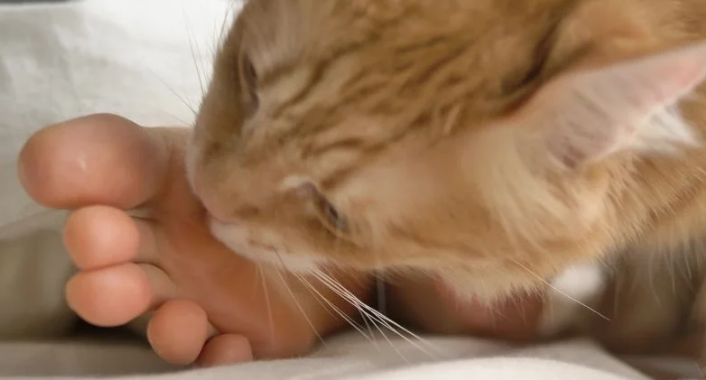
Why Do Cats Like to Lick Your Feet? (It’s Weirder – and Sweeter Than You Think)

You know the feeling. You’re minding your own business, maybe watching TV or scrolling through your phone, and suddenly — sandpaper tongue on your foot. Whether it’s a light lick, an aggressive grooming session, a friendly little nip, or that sneaky surprise attack while you’re barefoot, cats seem to have a bizarre fascination with feet. Continue reading Why Do Cats Like to Lick Your Feet? (It’s Weirder – and Sweeter Than You Think)

Posted on Leave a comment

Cats Are Not Black And White – They Always See The Gray Area

What does the world look like through a cat’s eyes?

Cats are fascinating creatures—stealthy, curious, and supremely adapted for night hunting.But when it comes to color, how do they actually see the world? While humans live in a world filled with vivid hues, cats experience a more muted palette. Let’s explore what colors cats can see, which ones they struggle with, and why their vision is still perfectly tailored to their needs.

What Colors Can Cats See?

Cats are not completely colorblind, but their color perception is quite different from ours. Humans are trichromats, meaning we have three types of cone cells in our eyes that allow us to see a full spectrum of color—red, green, and blue. Cats, on the other hand, are dichromats. This means they have only two types of cone cells, which limits their ability to see the full color range.

Cats can see some shades of:

  • Blue
  • Gray
  • Greenish-yellow

Blue is the color cats see most clearly. Their vision in this part of the spectrum is closest to human perception, making blue toys or objects more visually stimulating to your cat.

Colors Cats Struggle to See

Due to the absence of red-sensitive cone cells, cats cannot see red or pink the way humans do. These colors may appear as:

  • Dark gray
  • Muddy brown
  • Greenish-tan

Similarly, orange and purple can be confusing to cats. Since orange is a mix of red and yellow, and purple is a mix of red and blue, cats perceive them as washed-out or grayish shades.

Cat Vision vs. Human Vision

To better understand how cats see color, imagine looking at the world through a slightly desaturated Instagram filter—where everything is a bit duller, and the red spectrum is nearly nonexistent. Here’s a side-by-side comparison of how vision differs:

Feature Humans Cats
Cone cell types 3 (trichromatic) 2 (dichromatic)
Best color vision Red, green, blue Blue, greenish-yellow
Poor color vision None Red, orange, pink, purple
Night vision Limited Excellent
Motion detection Good Superior

Why Cats Don’t Need Full Color Vision

Although cats can’t appreciate the full rainbow, their vision is specialized for what matters most in their lives: hunting in low light. Their eyes are equipped with more rod cells, which are responsible for detecting motion and working in dim lighting. This is why cats can see so well at dusk and dawn—the prime hunting times for wild felines.

Their limited color range also helps their eyes process shapes and movement faster, which is far more useful for stalking prey than seeing a red rose in its full vibrance.

As a cat owner, how can we use this information?

Understanding your cat’s vision can help you choose toys and accessories that are more engaging. Try these tips:

  • Opt for blue or yellow toys rather than red or pink ones.
  • Use contrast—such as a blue toy on a white floor—to make objects easier for your cat to see.
  • Avoid relying solely on color when training or entertaining your cat—movement, sound, and scent are far more compelling.

Cats may not see the world in Technicolor, but their vision is perfectly suited for their needs. While they miss out on fiery reds and vibrant pinks, they make up for it with incredible low-light vision and keen motion detection. So next time you watch your cat pounce on a toy, remember: it might not be the color they’re reacting to—but the slightest flick of movement in a world they see just a little differently.

Ciao,

Posted on Leave a comment

You Want Me To Do WHAT? Yes You Can Train A Cat

Cats certainly are independent creatures. It seems as though they are resistant to training and indifferent to human commands. Dogs are known for their eagerness to learn and please. Cats carry a reputation for being aloof and stubborn. But is it really impossible to teach a cat new tricks? In reality, I think it’s important that we give cats credit for being able to learn some of the same things dogs can. Teaching cats certainly requires a different approach, a good understanding of their nature, and hefty dose of patience.

How Much Can You Teach a Cat?

  1. Basic Commands
    You might be surprised to know that cats can be taught basic commands like “sit,” “stay,” come when they’re called or what the word NO means. This kind of training is often associated with dogs, but with the right motivation, cats can pick up on these commands as well. Using positive verbal reinforcement, maybe a treat or two, or affection, is key. Unlike dogs, cats don’t respond well to negative reinforcement or punishment. They are more likely to rebel or disengage if they feel coerced. Personally, I think dogs are alike in this as well.
  2. Tricks and Fun Activities
    Cats can also learn more complex tricks like giving a high-five, rolling over, or playing fetch. Some cats are naturally more playful and curious, making them ideal candidates for learning tricks. Clicker training is a popular method where a sound (the clicker) is used to mark the correct behavior, followed by a reward. This method helps cats associate the sound with the action they performed and the treat or other positive reinforcement they receive afterward.
  3. Using the Litter Box
    One of the most common and essential things you can teach a cat is to use a litter box. Most cats have an innate instinct to cover their waste, so this usually doesn’t require extensive training. However, if a cat isn’t using the litter box properly, it can be a sign of stress, illness, or that the litter box or the litter itself isn’t to their liking; location, the cleanliness of the box, type of litter. Understanding these nuances is key to successful training. If you’re really serious about training your cat – even a little bit – you have to be somewhat of a “cat whisperer”.
  4. Behavioral Training
    Teaching a cat not to scratch furniture, jump on counters, or engage in other undesirable behaviors can be more challenging. Cats don’t respond well to punishment, so shouting or spraying them with water is unlikely to work and can damage your relationship. Instead, redirecting the behavior to something more acceptable, like a scratching post or a designated area, and rewarding the cat for using it, tends to be more effective.
  5. Socialization and Tolerance
    Cats can also be trained to be more tolerant of certain activities, like grooming, nail trimming, or even wearing a harness for outdoor walks. Socialization and desensitization techniques are important here. Gradually introducing the cat to these experiences in a calm and positive environment can help them become more accepting over time.

 The Challenges of Training a Cat

While cats are intelligent animals capable of learning, there are several challenges that make training them more difficult than training dogs or other pets.

Their Independence

Cats are naturally independent and often prefer to do things on their own terms (especially if you have a Tortie!). This means that training sessions need to be short, engaging, and timed according to the cat’s mood. Pushing a cat to train when they are not interested will be a frustrating experience for both of you.

Motivation
Unlike dogs, who often seek approval from their owners, cats are usually more self-motivated. Finding the right incentive, whether it’s a favorite treat, toy, or even praise, is crucial. However, once the cat has had enough, they might simply walk away, as if to say – “Ok human, I’ve had enough of this silliness.” – no matter how many treats you offer.

Consistency and Patience
Training a cat requires consistency and patience – this is a given. Progress can be slow, and setbacks are common. However, with regular practice and positive reinforcement, cats can learn a variety of behaviors. The key is to be patient, ready their body language, and not to expect immediate results.

Personality Differences
Every cat is different. Some are more food-driven, while others are more curious or playful. Understanding your cat’s personality will help you tailor your training approach. For example, a highly energetic cat might learn tricks more easily because they are naturally more engaged with their environment. On the other hand, a shy or anxious cat might need more gentle encouragement and time.

Is It Worth the Effort?

I think so! I’ve had both dogs and cats throughout my life. Although training dogs most certainly is a bit easier, training your kitty can be a rewarding experience that strengthens the bond between you. While it definitely requires more patience and a different approach than training dogs, the results are worth it. Not only can you teach your cat fun tricks or useful behaviors, but the mental stimulation is great for them.

I truly believe cats are more trainable than many people assume, but the process requires understanding their unique nature and working with it rather than against it. With the right techniques and plenty of patience, you can teach your cat new behaviors and add to the bonding experience exponentially.

Caio,