Posted on Leave a comment

How To Speak Cat – Tired Of Guessing What They Want?

Cats can be mysterious, perplexing, and at times downright bewildering.  For me, that is why I am so into cats and their quirky behaviors. It’s just fascinating to me.

While they don’t “talk” in a way we typically think of, they communicate with us hoomans constantly through body language, vocalizations, and behaviors. Understanding how cats express their feelings and needs can deepen your bond exponentially. Here are some ways that our kitties “talk” to us.

The Language of Meows, Purrs, and Hisses

Unlike dogs, which often use barks to communicate with both humans and other dogs, cats usually reserve their vocalizations for their human companions. Interestingly, adult cats don’t typically meow at each other—this behavior is primarily for human interaction.

  • Meowing: Cats have different meows for different situations, and each meow can vary depending on the individual cat. A soft, short meow may signal a simple greeting, while a loud, drawn-out meow might indicate hunger or a desire for attention. Some cats are more vocal than others, engaging in entire “conversations” with their humans.
  • Purring: Purring is one of the most recognizable cat sounds. It’s often associated with contentment, but cats also purr when they’re anxious or in pain, possibly as a self-soothing mechanism. If your cat purrs while cuddling, they’re probably enjoying the closeness, but if they purr at the vet’s office, it could indicate they’re nervous.
  • Hissing and Growling: These sounds are clear signals of fear, discomfort, or aggression. If a cat hisses or growls, it’s best to give them space and try to identify what’s causing their distress.

A Silent, Subtle Conversation

Cats are masters of body language, often using their posture, ears, and tails to communicate complex emotions.

  • Tail Movements: A cat’s tail is a vital communication tool. A tail held high usually signals confidence and happiness, while a puffed-up tail indicates fear or aggression. A slowly flicking tail might mean the cat is feeling irritated, while a rapidly swishing tail often signifies agitation.
  • Ears: Cats’ ears can move in many directions, each position offering a clue to their mood. Forward-facing ears indicate curiosity or relaxation, while flattened ears are a sign of fear or defensiveness.
  • Eyes: Slow blinking is a cat’s way of showing affection and trust. If your cat blinks at you slowly, it’s like they’re giving you a kiss! On the other hand, dilated pupils could indicate excitement, fear, or agitation.

Communicating Through Contact

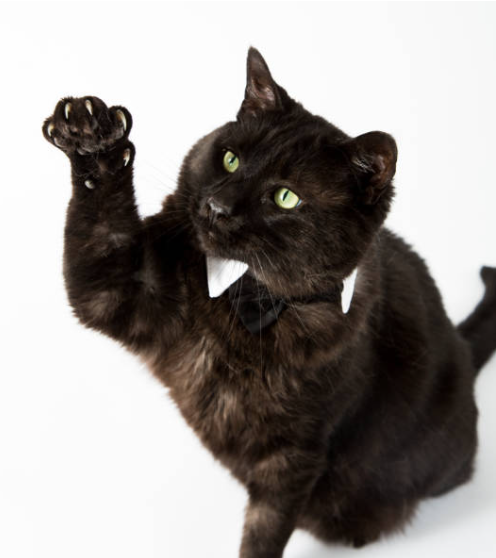
Cats often communicate through physical touch, especially with people they trust. I know my big male black cat Koji, smacks me with his paw every time I walk by him. No claws out – just a “What up bitch?” kind of thing. He’s my big baby boy that one. He’s very protective of me, and loyal as hell. What else can you expect from a Scorpio kitty?

  • Head Butting and Nuzzling: When your cat rubs their face against you, they’re marking you with their scent, a behavior known as “bunting.” This is a sign of affection and ownership—your cat is essentially claiming you as part of their family.
  • Kneading: This behavior, where a cat pushes their paws against a soft surface (like your lap), is often a sign of contentment. It’s a behavior that originates in kittenhood when cats knead their mother to stimulate milk flow. When they do this to humans, it’s a sign they feel safe and comfortable.
  • Playful Biting: Sometimes, cats will give gentle bites when playing or showing affection. These are usually soft and don’t break the skin, unlike a defensive bite, which is a clear sign to back off.

Communicating Needs and Moods

Beyond vocalizations and body language, cats have certain behaviors that communicate their wants and needs.

  • Bringing “Gifts”: If your outdoor cat brings you a dead mouse or bird, they’re not trying to gross you out—they’re demonstrating their hunting skills and offering you a share of their prize. It’s their way of showing they care!
  • Scratching: While scratching is a natural feline behavior for maintaining their claws, it’s also a way for cats to mark territory. If your cat scratches furniture or other objects, they’re leaving both a visual and scent mark.
  • Lying Belly-Up: When a cat exposes their belly, they’re showing vulnerability and trust. While it’s tempting to rub their belly (as you would with a dog), many cats don’t appreciate this gesture and might react by swatting or biting. This is a very sensitive area for many cats. Respect this posture as a sign of trust, but tread carefully!

How to Talk Back

Once you start decoding your cat’s signals, it’s essential to respond in ways that reinforce positive communication.

  • Mimic Slow Blinks: If your cat gives you a slow blink, try returning it! It’s a way of signaling that you understand and reciprocate their trust and affection.
  • Respect Their Boundaries: Just like humans, cats have different comfort zones. If your cat is signaling that they need space, give it to them. NEVER force interaction. You need to let them come to you, on their own terms.
  • Positive Reinforcement: When your cat communicates their needs and you respond correctly—like feeding them when they indicate hunger or playing with them when they’re playful—you build a stronger, more harmonious relationship.

Cats may not speak with words, but their communication is rich and varied. By paying close attention to their vocalizations, body language, and behavior, you can better understand their needs and feelings. The more attuned you are to these signals, the more fulfilling your relationship with your little fluff ball will be. Understanding how your cat talks to you is the key to a happy, healthy, and loving bond.

So next time your cat gives you that particular meow or flicks their tail a certain way, you’ll know exactly what they’re trying to say!

Ciao,

Posted on Leave a comment

The Kitty Swipe

If you’re a cat owner, you’ve likely experienced that playful yet slightly alarming moment when your feline friend swipes at your legs as you walk by. You might wonder if they’re trying to play, communicate, or just assert their dominance. Let’s delve into the reasons behind this behavior and what it means for your relationship with your furry companion.

  1. Instinctual Behavior

Cats are natural predators, and their instinct to pounce and swipe is deeply ingrained. In the wild, they would use these actions to catch prey. When you walk by, your movement may trigger their hunting instincts, prompting them to “attack” in a playful manner. This behavior mimics their natural predatory actions and allows them to engage in a bit of exercise.

  1. Playfulness

Cats are playful creatures, and swiping at you can be a way for them to initiate play. If your cat is feeling energetic, they might see you as a fun target to engage with. This behavior is especially common in younger cats and kittens, who often have bursts of energy and a strong desire to play. They might be inviting you to join them in a game of chase or to interact more directly.

  1. Attention Seeking

Sometimes, a swipe can be a call for attention. If your cat is feeling neglected or wants some interaction, swiping at you can be their way of saying, “Hey, look at me!” This is especially true if they associate your movement with feeding time or playtime. If you’ve been busy or preoccupied, your cat may decide to remind you of their presence with a playful swipe.

  1. Territorial Behavior

Cats are also territorial creatures. If you’ve recently moved or rearranged furniture, your cat might be feeling a bit uncertain about their territory. Swiping at you could be a way to assert their presence and remind you that this is their space. It’s a way of saying, “I’m here, and I’m in charge!”

  1. Affection and Bonding

Believe it or not, swiping can sometimes be a sign of affection. In the world of cats, playful swipes can be a friendly gesture, much like how they might bat at each other during play. It’s their way of engaging with you and can even be seen as an invitation to interact. If your cat follows up a swipe with purring or rubbing against you, it’s likely they’re feeling affectionate.

  1. Frustration or Annoyance

On the flip side, if your cat swipes at you in a more aggressive manner, it might be due to frustration or annoyance. Maybe they were enjoying a cozy spot and felt disturbed by your passing. It’s essential to pay attention to their body language; a twitching tail or flattened ears could signal that they’re not in the mood for interaction.

Tips for Managing the Swipe

If you find your cat’s swiping behavior a bit too much, here are a few tips to help manage it:

  • Engage in Play: Regular playtime can help expend some of their energy and reduce the urge to swipe. Use toys that mimic prey, like feather wands or laser pointers.
  • Create a Safe Space: Ensure your cat has plenty of cozy spots to retreat to where they feel secure, which can help reduce territorial aggression.
  • Observe Their Mood: Learn to read your cat’s body language. If they seem agitated, it might be best to give them some space.
  • Redirect Their Energy: If your cat swipes at you while you’re walking, try to redirect their energy to a toy or scratching post instead.

Conclusion

While it can be surprising when your cat swipes at you, understanding the reasons behind the behavior can help strengthen your bond. Whether it’s instinctual, playful, or a call for attention, knowing how to respond can lead to a more harmonious relationship with your feline friend. So the next time you feel that playful swipe, remember—it’s just your cat’s way of saying “hello” (or “let’s play!”).

Ciao,

Posted on Leave a comment

What’s Behind Those Freaky Cat Zoomies?

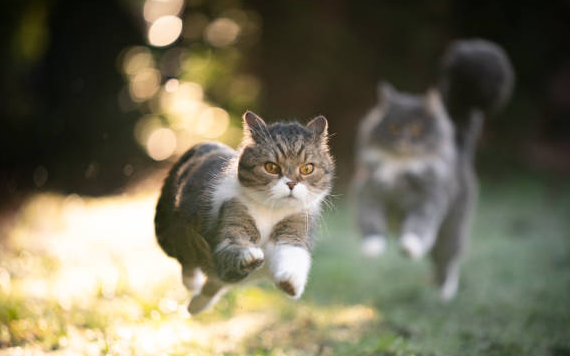
It’s FRAP time! And, it’s a mystery. You have more than likely witnessed this phenomenon: one moment, your cat is calmly lounging on the windowsill or nestled in a cozy spot, and the next, it’s tearing around the house at lightning speed, leaping onto furniture, darting through rooms, and performing seemingly random acrobatics. This sudden burst of energy is often referred to as a “Frenetic Random Activity Period,” or FRAP. But why do cats have these energetic episodes, and what exactly is happening in their bodies during a FRAP?

What triggers them? How do they affect your cat physically and mentally?

What is a FRAP?

A Frenetic Random Activity Period (FRAP) is a burst of hyperactive, often chaotic behavior that cats exhibit, usually involving running, jumping, pouncing, and generally acting out in a way that seems completely out of character for their usual calm or sleepy demeanor. These frenetic outbursts can last anywhere from a few seconds to a few minutes and are typically characterized by a sudden, intense energy surge.

While it can be entertaining for humans to watch, it can also be puzzling. Your cat might appear to be in a state of wild, unpredictable energy, running at full speed, sometimes for no apparent reason. It’s as if they’re playing an invisible game or chasing unseen prey.

Why Do Cats Have FRAPs?

FRAPs aren’t just random behavior—there are a few key reasons why cats experience these bursts of energy:

Predatory Instincts

At the core of every domestic cat, even if they’ve never hunted in the wild, is an instinct to hunt. FRAPs are a reflection of that hunting drive. In nature, wild cats like tigers, lions, and cheetahs engage in short, intense bursts of energy when stalking and chasing prey. Domestic cats retain this instinct, and FRAPs can mimic this type of predatory behavior, albeit without the actual hunt. During a FRAP, a cat might feel the need to “chase” or “capture” something, even if it’s just an invisible target.

Excess Energy

Cats are natural athletes, and even though they sleep a lot (up to 16 hours a day for some), they still have energy to burn. A FRAP can occur when a cat has pent-up energy that needs to be released. Cats that are indoors might not get the same opportunities to burn off their energy as outdoor cats, so they use FRAPs as a way to expel this excess activity. This is why you’ll often see kittens or younger cats engaging in these outbursts more frequently—because they have more energy to spare!

Play and Mental Stimulation

FRAPs can also be a sign of mental and physical stimulation. If your cat has just had a play session or a moment of excitement (like hearing a bird outside the window), the adrenaline from that stimulation may prompt them to engage in a FRAP afterward. Even the playful behavior of chasing a toy or interacting with their human can trigger these bursts of activity.

  1. Stress Relief or Anxiety

In some cases, FRAPs can serve as a form of stress relief. If a cat is feeling anxious or overstimulated, they may suddenly engage in high-energy behavior to cope with the stress. This might happen after a trip to the vet, a change in the environment, or even after a tense moment with another pet in the house.

The Physical Effects of FRAPs

While FRAPs can seem chaotic, they actually serve a beneficial purpose for your cat’s body and mind. Here’s how they impact your cat physically:

  1. Physical Exercise

During a FRAP, cats get a full-body workout. The sprinting, leaping, and pouncing they do during these episodes help build muscle strength, improve coordination, and keep their bodies in good physical condition. Even though cats are generally great at conserving energy during the day, these intense bursts ensure that they’re getting a balance of rest and active play.

  1. Improved Reflexes and Agility

FRAPs are a way for cats to hone their reflexes and agility. Their quick, jerky movements simulate real hunting skills, allowing them to practice pouncing, dodging, and rapidly changing direction. These skills help cats stay sharp in case they need to hunt or defend themselves.

  1. Endorphin Release and Mood Boost

Just like humans, cats experience a release of endorphins during physical activity. These “feel-good” chemicals help reduce stress and create a sense of happiness and contentment. A well-timed FRAP can help alleviate any pent-up anxiety your cat may have and bring a sense of calm after the activity.

How to Manage and Encourage Healthy FRAPs

While you can’t stop your cat from having FRAPs (and why would you want to?), there are a few ways to manage them and encourage healthy outlets for your cat’s energy:

Playtime

Regular interactive play sessions, especially with toys that mimic prey (such as feather wands or laser pointers), can help your cat burn off energy in a controlled way. This may even reduce the frequency of unpredictable FRAPs by allowing your cat to release their energy at more predictable times.

Environmental Enrichment

Provide an environment where your cat can explore and engage in activities that stimulate both their body and mind. Scratching posts, cat trees, climbing shelves, and puzzle feeders can help keep your cat busy and reduce frustration that may lead to spontaneous FRAPs.

Routine and Comfort

Cats tend to feel more secure when they have a consistent routine. Feeding, playtime, and quiet moments can help manage any anxiety that might contribute to FRAPs. Make sure your cat has a comfortable space where they can retreat and rest after an intense burst of energy.

The Unequivocal Joy of FRAPs

While you might be perplexed the first time you see your cat suddenly zooming through the house like a tiny, furry hurricane, know that it’s completely normal behavior! FRAPs are just your cat’s way of expressing their natural energy, predatory instincts, and need for physical activity.

So the next time your cat enters a FRAP phase, sit back, enjoy the show, and appreciate the joy and vitality your pet is experiencing. It’s just another way your cat stays fit, sharp, and happy. Plus, it’s pretty entertaining to watch!

Ciao,