Posted on Leave a comment

The Great Cat Debate: Is It Better to Have One Cat or Two?

Deciding whether to have one cat or two can be a common dilemma for seasoned and prospective cat owners alike.

Either choice comes with its own set of benefits and challenges. Your decision will ultimately depend on several factors; your living situation, your lifestyle, and even your financial situation. The following information may help you decide what’s best for everyone involved.

One Cat: The Solo Feline Experience

Pros:

  1. Less Complexity: Managing one cat generally requires less coordination compared to having two. You only need to focus on one cat’s health, grooming, and behavioral needs, making it simpler to provide tailored care.
  2. Lower Costs: The financial commitment is more straightforward with one cat. You’ll only need to budget for one set of vaccinations, food, litter, of course – toys, and vet visits.
  3. Focused Attention: A single cat can enjoy undivided attention and affection from you. This can be ideal if you have a busy schedule or prefer to focus your attention on one pet.
  4. Easier to Travel: If you travel frequently or have a busy lifestyle, it’s easier to arrange care for one cat. Finding a pet sitter or making arrangements for one cat can be less complicated.

Cons:

  1. Loneliness: Cats are social creatures, and a single cat might experience loneliness or boredom when you’re away. This can lead to behavioral issues or separation anxiety.
  2. Lack of Playmate: Without a feline companion, your cat might miss out on the benefits of interactive play and socialization that another cat can provide.
  3. Increased Human Dependency: A single cat might rely heavily on you for stimulation and interaction, which can be demanding if you’re often busy.

Two Cats: The Dynamic Duo

Pros:

  1. Companionship: Having two cats can provide each with a constant playmate and companion. They bounce off one another and this can reduce loneliness and boredom, especially when you’re not at home.
  2. Behavioral Benefits: Cats often entertain and groom each other (I know mine do), which can lead to healthier and more balanced behavior. They can help each other manage stress and stay active.
  3. Reduced Separation Anxiety: Two cats can help each other adjust to periods of separation from their human family members, potentially reducing anxiety and loneliness.
  4. Socialization: Cats that grow up together or are introduced properly tend to socialize well, and having a second cat can enrich their social skills and overall happiness.

Cons:

  1. Increased Costs: The financial commitment definitely doubles with two cats. You’ll need to budget for twice the food, litter, toys, and veterinary care.
  2. More Space Needed: Two cats may require more space to avoid territorial disputes. If you live in a small apartment or have limited space, this can be a significant consideration.
  3. Potential for Conflict: Introducing a new cat to your home can sometimes lead to conflicts or territorial issues, especially if the cats do not get along initially. Proper introductions and patience are key. When I took home two cats from the local animal shelter, I retrieved them a day apart and they were only a month apart in age – 4 and 5 months. At first there was a lot of sniffing, spitting, hissing and growling going on, but now – they really love each other, play fight, groom one another and really seem chill with each other’s company.
  4. Travel and Care: While having two cats can provide companionship for each other, finding care for two cats when you travel can be more challenging and costly.

Making the Decision

It’s really based on your personal situation and preferences:

  • Time and Attention: If you have the time and energy to dedicate to two cats, they can provide each other with valuable companionship. If your schedule is tight, one cat might be easier to manage.
  • Financial Considerations: Consider your budget for pet care. Two cats will require more resources, but the benefits of their companionship might outweigh the costs for some owners.
  • Living Space: Evaluate your living space and whether it can comfortably accommodate multiple cats. Cats need space to roam and places to retreat, so make sure you have enough room for both.
  • Personal Preferences: Reflect on your lifestyle and how much interaction you can realistically provide. If you prefer a quieter home with less complexity, one cat might be ideal. If you’re up for the challenge and can provide for them, two cats can offer a lively and engaging dynamic. Mine keep me entertained that is for sure!

Ultimately, both one cat and two cats can make wonderful companions. I’ve always had just one cat. I never thought I would have more than one cat at a time. But I do not regret getting both of them for one minute. They each have distinct personalities, and I bonded with them right away – without hesitation. Yes, this means twice the food, Vet bills, etc., etc. but I say it’s so worth it! They keep me entertained, and they keep each other entertained when I’m otherwise occupado.

The best choice is one that fits your lifestyle and ensures that your feline friends are happy and healthy. Whether you go for the solo experience or the dynamic duo, what matters most is the love and care you provide.

Remember to check out our latest collection of stylish and snarky cat themed totes, coaster sets, mugs and other kitty accessories at Snarky Cat Boutique to pamper your pets in style!

Stay pawsitive and keep those tails straight up in the air!

Ciao,

Posted on Leave a comment

Why Won’t My Cat Eat This Food?

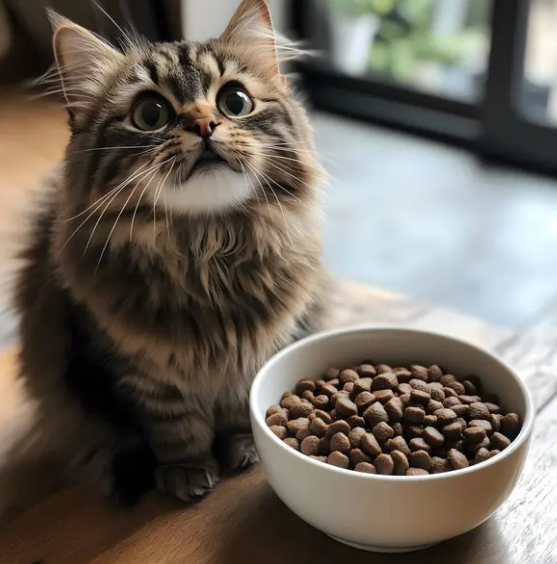
Alright, fellow cat owners, gather around. We need to talk. If you’re anything like me, you’ve probably found yourself staring at your cat, spoon in hand, and thinking, What the actual F! “Why won’t you just eat this food?! It cost me more than my last meal at that fancy restaurant I went to!” And then, as you gently slide the plate toward their royal highness, they look at you like you’ve just served them a plate of mushy peas covered in dirt. Or worse, they might just turn their back on you entirely. Not even a glance. So, what gives?

Let me paint you a not-so-pretty little picture. You’ve spent hundreds—yes, hundreds—on every flavor, texture, brand, and shape of cat food under the sun. Organic. Grain-free. Gluten-free. A blend of wild-caught salmon and locally sourced quinoa, (is that really a thing?) but your little dahlink is having NONE of it. AHHHHHHHH!!! The nerve.

So what the H is going on? Read on for some freaky feline reasoning…

  1. Because She’s a Cat. Purrrr and simple.

Let’s get this out of the way first: your cat is a creature of chaos and mystery. He/She will not be reasoned with. He/She will not be dictated to. They will, however, stare at you in disgust as you try to offer them anything resembling a meal that doesn’t meet their ridiculously high standards. Cats are finicky by nature, and they can be super picky about food. Just because you spent $50 on a fancy can of pâté doesn’t mean they will deign to even smell it. They’re not going to eat it because you’ve spent money on it. If only humans could be that easy to please.

  1. Texture: The Hidden Dealbreaker

You thought you were so clever, picking up that gourmet pâté or that bone broth soaked kibble. The label says it’s for “sophisticated taste buds or the fussiest of kitties”. Unh huh. Sure. Sounds great. But your cat? They just look at that smooth, wet mess like it’s the worst thing they’ve ever seen. No way are they going to eat that mushy food. You’d think you were trying to feed them a bowl of oranges with garlic (furballs don’t like that stuff). They need crunch. They need that particular texture that says, “I’m a hunter. I’m a warrior. I need something to take a few cautious bites of before I leave my food behind to wither away in the bowl.”

But you, in your infinite wisdom, decide to try soft, moist food again, thinking, “Maybe this time?” Spoiler alert: Guess again. Cats don’t just eat. They’re connoisseurs, and that texture just isn’t right. Have fun with that $50 4 lb. bag of kibble that will never see the light of day.

  1. The “I’ll Only Eat It If It’s the Most Expensive Option” Syndrome

Ah, the golden rule of the feline kingdom: If it’s not expensive, it’s not worthy. Somewhere along the line, your cat has decided that only the finest, most outrageously priced food will do. Enter the $40 bag of freeze-dried raw meat chunks—organic, pasture-raised, and probably blessed by a high priestess. You offer it to them, and they just look at you with disdain, as if to say “How dare you serve me this peasant food when I clearly deserve more?”

But then, bam! The $100+ price tag isn’t just a price tag. It’s a status symbol. You’ve hit the jackpot. Only now, your cat(s) thinks they’re royalty, and you’ll just have to keep spending more and more on exotic food until they decide they’re tired of that too. You’ve created little monsters. Enjoy that $200 worth of canned tuna she’s currently ignoring. Your cat’s food game is an endless loop of escalating luxury and disappointment. And you’re spending a fortune on gas too – driving to the local animal shelter every other day to donate all the stuff your precious little fur ball freaks won’t touch.

  1. The “If It’s Not My Brand, I’ll Starve” Effect

I’ve spent days going through different brands, carefully curating the best ingredients, reading all the reviews like an obsessed scholar. Maybe this will work, you think, maybe this is the one! Nope. Doesn’t matter how gourmet it is or how much research you did. Your cat has one brand that they swear by—and that’s it. The rest? Not in “MEEOW” house.

Do they have any logical reasoning for this? Absolutely not. If only cats possessed the science of reasoning. If it’s not the exact flavor from the exact brand they’ve been eating since they came to live with you, they’ll  give you that look like you’ve just served them a plate of gravel. Meanwhile, you’re sitting there with a mountain of unused cans from that other brand you tried, thinking, I spent how much on these?!

  1. Because She’s Part of a Secret Feline Society

Let’s be real: your cat’s not hungry. He/She is just playing mind games with you. Cats, as you know, are experts in manipulation. They know you’ll try to win them over with the next best thing, and they’ll milk it for all it’s worth. “Ooh, mom’s getting frustrated! Better just pretend to nibble on this for a bit… then refuse to eat it once she’s left the room.”

You, the loving pet owner, are now part of a cruel game of cat-and-mouse, where you’ve spent hundreds of dollars trying to find a food she’ll actually eat. Spoiler alert: she’ll never tell you what she truly wants. It’s like she’s a member of some elite feline society, and only the most dedicated and persistent Cat Whisperers will ever know the true way to please her. But don’t worry, that membership doesn’t come cheap.

  1. The “I’ll Eat It If You Don’t Want Me To” Phase

And just when you think you’ve cracked the code, that’s when the plot thickens. Your cat suddenly decides she’ll only eat the food she’s been turning down for weeks—when you’re not looking. You find a half-eaten dish of $50 raw food tossed aside and wonder, Did they actually eat that? Or are they just toying with me?

The worst part? You can never be sure. One minute, one of them is pawing at the bowl, the next, they’re glaring at you like you’ve committed an unforgivable sin by not providing the preferred brand of chicken. GADS!

So, What’s the Solution?

Well, there is no solution. Cats are enigmas wrapped in fur, and food is just one of their many ways of asserting dominance. You’ll keep buying fancy food, keep trying to cater to their whims, and keep being disappointed. But honestly, isn’t that the true definition of being a cat owner? Let’s all just accept that we’re a bunch of suck-holes. Our bank balance is as low as it’s ever been, and the loveable little freaks will never be satisfied.

But hey, if you figure it out, let me know. I’ll be sitting here with my 20 unopened cans of gourmet food, wondering why my cat is choosing to eat the cardboard box instead.

Ciao,

Posted on Leave a comment

What’s Behind Those Freaky Cat Zoomies?

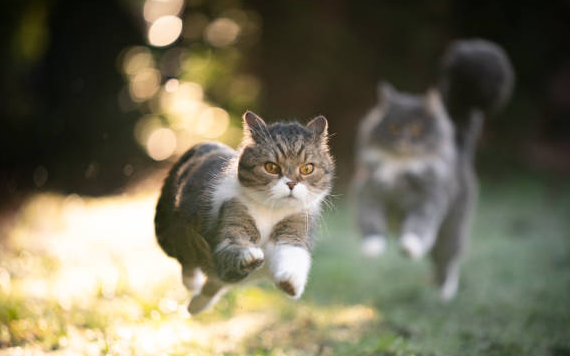
It’s FRAP time! And, it’s a mystery. You have more than likely witnessed this phenomenon: one moment, your cat is calmly lounging on the windowsill or nestled in a cozy spot, and the next, it’s tearing around the house at lightning speed, leaping onto furniture, darting through rooms, and performing seemingly random acrobatics. This sudden burst of energy is often referred to as a “Frenetic Random Activity Period,” or FRAP. But why do cats have these energetic episodes, and what exactly is happening in their bodies during a FRAP?

What triggers them? How do they affect your cat physically and mentally?

What is a FRAP?

A Frenetic Random Activity Period (FRAP) is a burst of hyperactive, often chaotic behavior that cats exhibit, usually involving running, jumping, pouncing, and generally acting out in a way that seems completely out of character for their usual calm or sleepy demeanor. These frenetic outbursts can last anywhere from a few seconds to a few minutes and are typically characterized by a sudden, intense energy surge.

While it can be entertaining for humans to watch, it can also be puzzling. Your cat might appear to be in a state of wild, unpredictable energy, running at full speed, sometimes for no apparent reason. It’s as if they’re playing an invisible game or chasing unseen prey.

Why Do Cats Have FRAPs?

FRAPs aren’t just random behavior—there are a few key reasons why cats experience these bursts of energy:

Predatory Instincts

At the core of every domestic cat, even if they’ve never hunted in the wild, is an instinct to hunt. FRAPs are a reflection of that hunting drive. In nature, wild cats like tigers, lions, and cheetahs engage in short, intense bursts of energy when stalking and chasing prey. Domestic cats retain this instinct, and FRAPs can mimic this type of predatory behavior, albeit without the actual hunt. During a FRAP, a cat might feel the need to “chase” or “capture” something, even if it’s just an invisible target.

Excess Energy

Cats are natural athletes, and even though they sleep a lot (up to 16 hours a day for some), they still have energy to burn. A FRAP can occur when a cat has pent-up energy that needs to be released. Cats that are indoors might not get the same opportunities to burn off their energy as outdoor cats, so they use FRAPs as a way to expel this excess activity. This is why you’ll often see kittens or younger cats engaging in these outbursts more frequently—because they have more energy to spare!

Play and Mental Stimulation

FRAPs can also be a sign of mental and physical stimulation. If your cat has just had a play session or a moment of excitement (like hearing a bird outside the window), the adrenaline from that stimulation may prompt them to engage in a FRAP afterward. Even the playful behavior of chasing a toy or interacting with their human can trigger these bursts of activity.

  1. Stress Relief or Anxiety

In some cases, FRAPs can serve as a form of stress relief. If a cat is feeling anxious or overstimulated, they may suddenly engage in high-energy behavior to cope with the stress. This might happen after a trip to the vet, a change in the environment, or even after a tense moment with another pet in the house.

The Physical Effects of FRAPs

While FRAPs can seem chaotic, they actually serve a beneficial purpose for your cat’s body and mind. Here’s how they impact your cat physically:

  1. Physical Exercise

During a FRAP, cats get a full-body workout. The sprinting, leaping, and pouncing they do during these episodes help build muscle strength, improve coordination, and keep their bodies in good physical condition. Even though cats are generally great at conserving energy during the day, these intense bursts ensure that they’re getting a balance of rest and active play.

  1. Improved Reflexes and Agility

FRAPs are a way for cats to hone their reflexes and agility. Their quick, jerky movements simulate real hunting skills, allowing them to practice pouncing, dodging, and rapidly changing direction. These skills help cats stay sharp in case they need to hunt or defend themselves.

  1. Endorphin Release and Mood Boost

Just like humans, cats experience a release of endorphins during physical activity. These “feel-good” chemicals help reduce stress and create a sense of happiness and contentment. A well-timed FRAP can help alleviate any pent-up anxiety your cat may have and bring a sense of calm after the activity.

How to Manage and Encourage Healthy FRAPs

While you can’t stop your cat from having FRAPs (and why would you want to?), there are a few ways to manage them and encourage healthy outlets for your cat’s energy:

Playtime

Regular interactive play sessions, especially with toys that mimic prey (such as feather wands or laser pointers), can help your cat burn off energy in a controlled way. This may even reduce the frequency of unpredictable FRAPs by allowing your cat to release their energy at more predictable times.

Environmental Enrichment

Provide an environment where your cat can explore and engage in activities that stimulate both their body and mind. Scratching posts, cat trees, climbing shelves, and puzzle feeders can help keep your cat busy and reduce frustration that may lead to spontaneous FRAPs.

Routine and Comfort

Cats tend to feel more secure when they have a consistent routine. Feeding, playtime, and quiet moments can help manage any anxiety that might contribute to FRAPs. Make sure your cat has a comfortable space where they can retreat and rest after an intense burst of energy.

The Unequivocal Joy of FRAPs

While you might be perplexed the first time you see your cat suddenly zooming through the house like a tiny, furry hurricane, know that it’s completely normal behavior! FRAPs are just your cat’s way of expressing their natural energy, predatory instincts, and need for physical activity.

So the next time your cat enters a FRAP phase, sit back, enjoy the show, and appreciate the joy and vitality your pet is experiencing. It’s just another way your cat stays fit, sharp, and happy. Plus, it’s pretty entertaining to watch!

Ciao,