Posted on Leave a comment

The Upside-Down Stare: When Cats Flip You Off… Literally

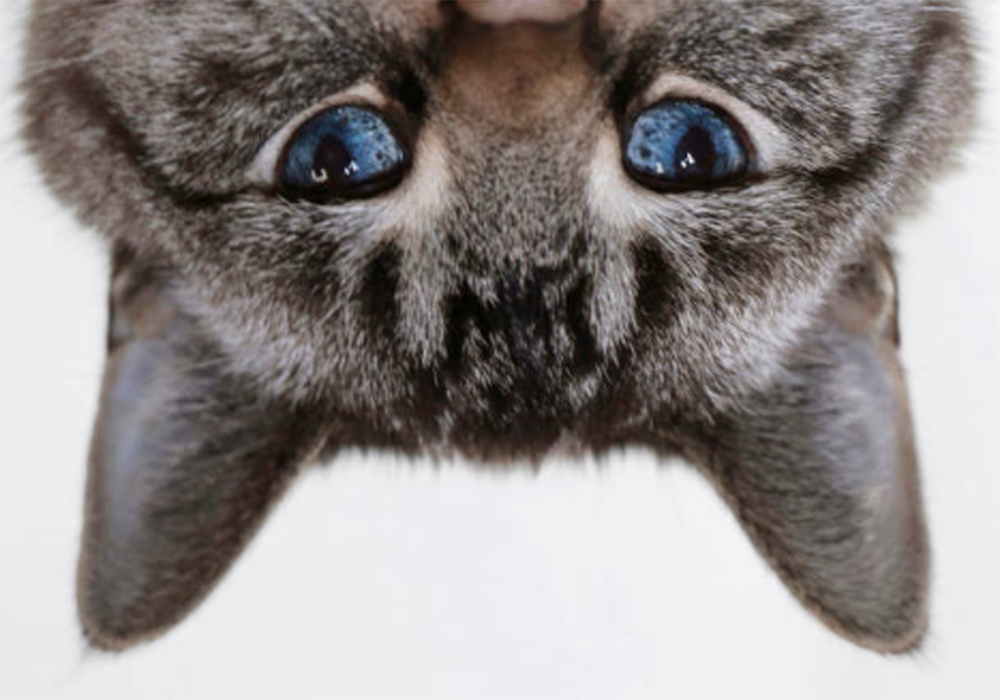
So, you’re sitting there, scrolling through your phone, trying to convince yourself that eating another handful of Frosted Mother’s Circus Animal Cookies isn’t a bad idea, when you notice your cat. They’re on their back, belly exposed (but don’t you dare touch it), head twisted at a 90-degree angle, eyes locked on you… upside down.

Naturally, you wonder: Why? Why is this fluffy little goblin staring at me like a deranged bat?

Well, dear human, let’s dig into the absurd truths:

Because It Makes You Look Ridiculous

Cats already know they’re the superior species. When they look at you upside down, it’s basically their way of re-confirming: “Yep, still the weird hairless monkey I’ve been stuck with. Still amusing.” You look funny enough right-side up. Tilted 180 degrees? Comedy gold.

It’s a Power Move

You think your cat looks vulnerable lying on her back? Ha. That’s a trap. They’re staring at you upside down while exposing the Danger Fluff (a.k.a. their belly) just to watch you squirm. Touch it, and you’ll be punished. Don’t touch it, and you’ll be judged. Either way—you lose.

They’re Redecorating Their POV

Cats spend all day in the same house. Same furniture, same walls, same boring humans. So why not flip the view? Looking at you upside down is like switching from cable news to reality TV.  Same nonsense, different angle.

Because They Can

Let’s be real: cats don’t need a reason for anything they do. You’re the one desperately trying to decode their every twitch like it’s a sacred text. Your cat? They’re just vibing, stretching their spine, and thinking, “This idiot is going to Google why I’m doing this, aren’t they?”

It’s the Cat Version of Subtle Mockery

Humans hang art upside down in museums and call it avant-garde. Cats stare at you upside down and call it Tuesday. The difference? Your cat’s not trying to impress anyone. They’re just reminding you that your entire existence is, from their perspective, inherently silly.

And so…

Next time your cat is upside down, don’t ask “what does it mean?” Just accept it. Your cat isn’t trying to communicate profound wisdom or hidden love. They’re just being a jerk. A cute jerk. A jerk who owns you.

Ciao,

Written for The Cat Whisperer Blog by Annie St. Germain, resident feline affair chronicler at Snarky Cat Boutique. 🐾
Posted on Leave a comment

Why Do Cats Like to Lick Your Feet? (It’s Weirder – and Sweeter Than You Think)

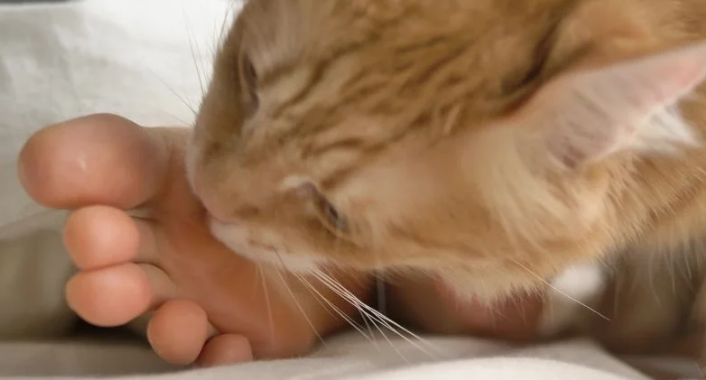
You know the feeling. You’re minding your own business, maybe watching TV or scrolling through your phone, and suddenly — sandpaper tongue on your foot. Whether it’s a light lick, an aggressive grooming session, a friendly little nip, or that sneaky surprise attack while you’re barefoot, cats seem to have a bizarre fascination with feet. Continue reading Why Do Cats Like to Lick Your Feet? (It’s Weirder – and Sweeter Than You Think)

Posted on Leave a comment

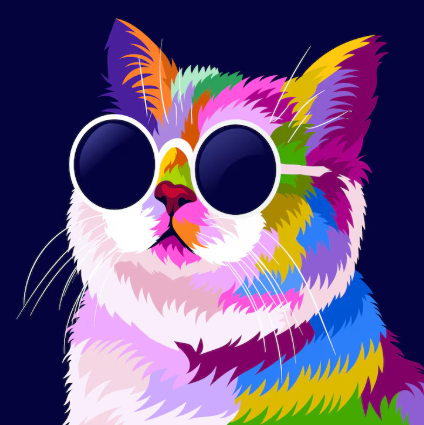
Cats Are Not Black And White – They Always See The Gray Area

What does the world look like through a cat’s eyes?

Cats are fascinating creatures—stealthy, curious, and supremely adapted for night hunting.But when it comes to color, how do they actually see the world? While humans live in a world filled with vivid hues, cats experience a more muted palette. Let’s explore what colors cats can see, which ones they struggle with, and why their vision is still perfectly tailored to their needs.

What Colors Can Cats See?

Cats are not completely colorblind, but their color perception is quite different from ours. Humans are trichromats, meaning we have three types of cone cells in our eyes that allow us to see a full spectrum of color—red, green, and blue. Cats, on the other hand, are dichromats. This means they have only two types of cone cells, which limits their ability to see the full color range.

Cats can see some shades of:

  • Blue
  • Gray
  • Greenish-yellow

Blue is the color cats see most clearly. Their vision in this part of the spectrum is closest to human perception, making blue toys or objects more visually stimulating to your cat.

Colors Cats Struggle to See

Due to the absence of red-sensitive cone cells, cats cannot see red or pink the way humans do. These colors may appear as:

  • Dark gray
  • Muddy brown
  • Greenish-tan

Similarly, orange and purple can be confusing to cats. Since orange is a mix of red and yellow, and purple is a mix of red and blue, cats perceive them as washed-out or grayish shades.

Cat Vision vs. Human Vision

To better understand how cats see color, imagine looking at the world through a slightly desaturated Instagram filter—where everything is a bit duller, and the red spectrum is nearly nonexistent. Here’s a side-by-side comparison of how vision differs:

Feature Humans Cats
Cone cell types 3 (trichromatic) 2 (dichromatic)
Best color vision Red, green, blue Blue, greenish-yellow
Poor color vision None Red, orange, pink, purple
Night vision Limited Excellent
Motion detection Good Superior

Why Cats Don’t Need Full Color Vision

Although cats can’t appreciate the full rainbow, their vision is specialized for what matters most in their lives: hunting in low light. Their eyes are equipped with more rod cells, which are responsible for detecting motion and working in dim lighting. This is why cats can see so well at dusk and dawn—the prime hunting times for wild felines.

Their limited color range also helps their eyes process shapes and movement faster, which is far more useful for stalking prey than seeing a red rose in its full vibrance.

As a cat owner, how can we use this information?

Understanding your cat’s vision can help you choose toys and accessories that are more engaging. Try these tips:

  • Opt for blue or yellow toys rather than red or pink ones.
  • Use contrast—such as a blue toy on a white floor—to make objects easier for your cat to see.
  • Avoid relying solely on color when training or entertaining your cat—movement, sound, and scent are far more compelling.

Cats may not see the world in Technicolor, but their vision is perfectly suited for their needs. While they miss out on fiery reds and vibrant pinks, they make up for it with incredible low-light vision and keen motion detection. So next time you watch your cat pounce on a toy, remember: it might not be the color they’re reacting to—but the slightest flick of movement in a world they see just a little differently.

Ciao,